
Case Study
AI-Driven Conversion From Cold Meta Traffic
Between 27 Oct and 25 Nov, Apex Appointments deployed Converteer.ai’s autonomous follow-up engine across its Meta campaigns. The system engaged 192 new leads, booked 79 appointments without manual intervention, and reduced SDR workload by 41%, directly matching the percentage of leads fully handled by AI. Average follow-up time decreased from 4–24 hours to 2 minutes and 33 seconds, creating a measurable uplift in conversion efficiency.
Case Study
AI-Driven Conversion From Cold Meta Traffic
Between 27 Oct and 25 Nov, Apex Appointments deployed Converteer.ai’s autonomous follow-up engine across its Meta campaigns. The system engaged 192 new leads, booked 79 appointments without manual intervention, and reduced SDR workload by 41%, directly matching the percentage of leads fully handled by AI. Average follow-up time decreased from 4–24 hours to 2 minutes and 33 seconds, creating a measurable uplift in conversion efficiency.
Case Study
AI-Driven Conversion From Cold Meta Traffic
Between 27 Oct and 25 Nov, Apex Appointments deployed Converteer.ai’s autonomous follow-up engine across its Meta campaigns. The system engaged 192 new leads, booked 79 appointments without manual intervention, and reduced SDR workload by 41%, directly matching the percentage of leads fully handled by AI. Average follow-up time decreased from 4–24 hours to 2 minutes and 33 seconds, creating a measurable uplift in conversion efficiency.
Case Study
AI-Driven Conversion From Cold Meta Traffic
Between 27 Oct and 25 Nov, Apex Appointments deployed Converteer.ai’s autonomous follow-up engine across its Meta campaigns. The system engaged 192 new leads, booked 79 appointments without manual intervention, and reduced SDR workload by 41%, directly matching the percentage of leads fully handled by AI. Average follow-up time decreased from 4–24 hours to 2 minutes and 33 seconds, creating a measurable uplift in conversion efficiency.
The Challenge
Apex generated consistent lead flow from Meta ads, but follow-up was entirely manual. This created structural inefficiencies:
1. Human follow-up delays ranged from 4 to 24 hours
Depending on volume, time of day, and team availability, first-touch speed was inconsistent and frequently outside the optimal conversion window.
2. Lead decay was severe
Industry benchmarks show most cold leads lose interest after 5–10 minutes. Waiting hours drastically reduced qualification rates.
3. No ability to handle volume spikes
On high-volume days, Apex SDRs could not maintain consistent coverage, resulting in missed opportunities.
4. High SDR cost for low-leverage tasks
Manual dialing, manual texting, and manual appointment scheduling consumed the majority of SDR time without increasing revenue.
Apex needed a conversion layer that was immediate, consistent, and scalable.
The Solution
Converteer.ai deployed its Autonomous AI Appointment Engine, designed to replace the first-touch SDR workflow.
Instant speed-to-lead (2:33 delay by design)
The system is capable of sub-second follow-up, but for authenticity and conversation integrity, an intentional 2:33 delay was added.
This eliminated the human inconsistency of 4–24 hours, transforming the entire conversion funnel.
AI handled the full qualification pipeline
First-touch outreach
Multi-step nurturing
Objection handling
Calendar booking
Routing and reminders
Re-engagement of inactive leads
No human intervention was required for these steps.
What We Delivered
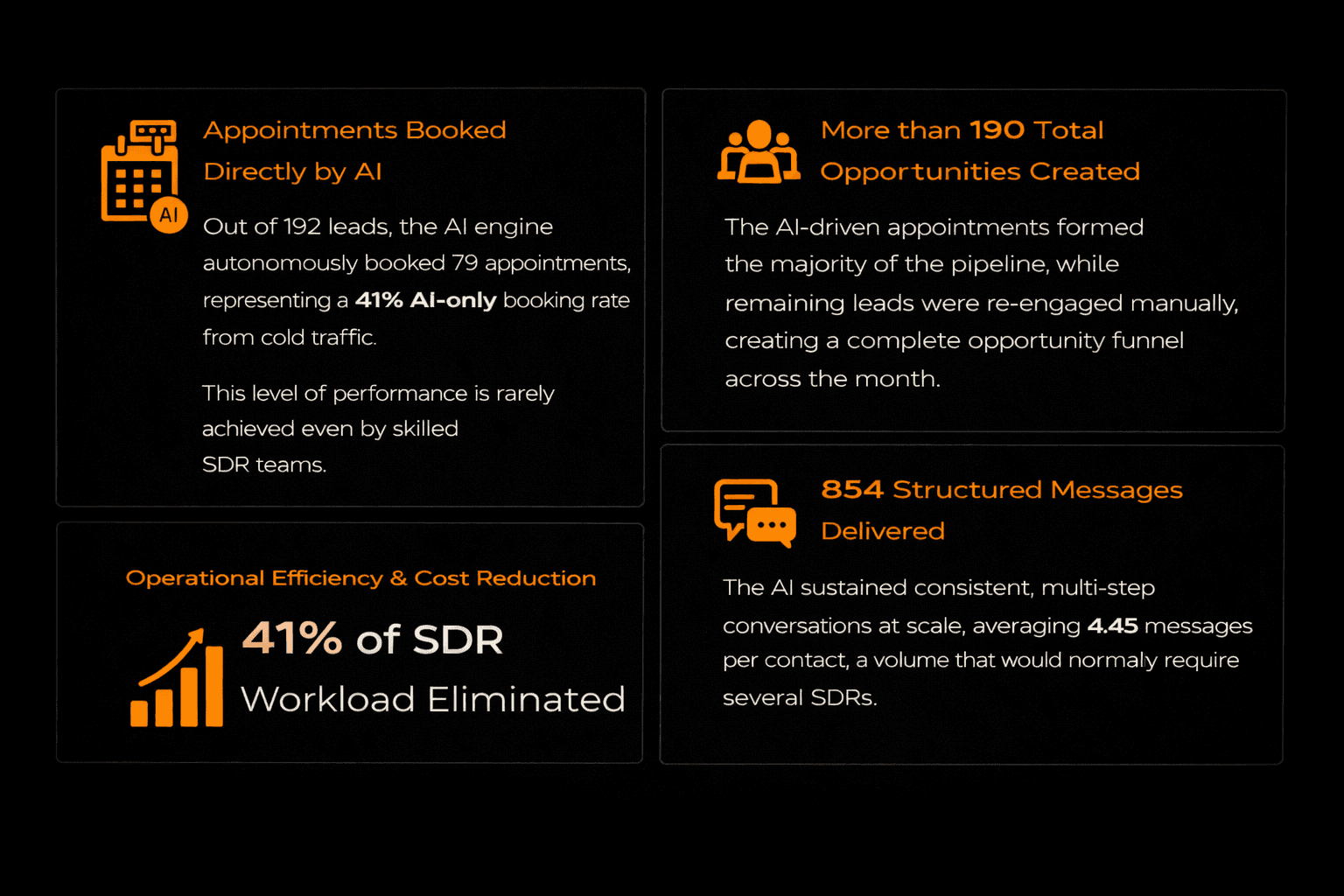
1. 79 Appointments Booked Directly by AI
Out of 192 leads, the AI engine autonomously booked 79 appointments, representing a 41% AI-only booking rate from cold traffic.
This level of performance is rarely achieved even by skilled SDR teams.
2. More than 190 Total Opportunities Created
The AI-driven appointments formed the majority of the pipeline, while remaining leads were re-engaged manually, creating a complete opportunity funnel across the month.
3. 854 Structured Messages Delivered
The AI sustained consistent, multi-step conversations at scale, averaging 4.45 messages per contact, a volume that would normally require several SDRs.
Operational Efficiency & Cost Reduction
41% of SDR Workload Eliminated
Because the AI engine booked 79 out of 192 total leads:
41% of all inbound leads required no manual follow-up
41% of SDR first-touch labor was removed
41% of appointment scheduling workload disappeared
This is a direct, measurable efficiency gain tied to the AI system.
SDR Cost Benchmarks
EU SDR cost: €3,800–€5,200 per month
US SDR cost: $6,000–$8,500 per month
With a 41% workload reduction, Apex effectively saves:
€1,550–€2,130 per SDR per month (EU)
$2,460–$3,485 per SDR per month (US)
This is pure cost reduction, not including revenue uplift from faster follow-up.
Strategic Impact
1. Conversion layer performance increased sharply
Removing the 4–24 hour delay and replacing it with a controlled 2:33 response significantly improved lead responsiveness and booking rates.
2. Predictable monthly appointment volume
AI ensured consistent coverage regardless of lead volume, time of day, or campaign intensity.
3. Lower operational cost
Apex reduced SDR dependency and improved unit economics across their acquisition funnel.
4. Improved sales team focus
Human reps were redirected to revenue activities rather than repetitive qualification tasks.
What This Proves
The Apex engagement demonstrates that an autonomous follow-up engine can:
Outperform manual SDRs in both speed and quality
Maintain high booking volume from cold paid traffic
Deliver measurable, predictable efficiency gains
Reduce labor cost by directly offsetting SDR workload
Strengthen revenue operations without increasing headcount
Turn Meta campaigns into scalable appointment-generation machines
This case highlights how AI can function as a full conversion infrastructure, not a tool.
The Challenge
Apex generated consistent lead flow from Meta ads, but follow-up was entirely manual. This created structural inefficiencies:
1. Human follow-up delays ranged from 4 to 24 hours
Depending on volume, time of day, and team availability, first-touch speed was inconsistent and frequently outside the optimal conversion window.
2. Lead decay was severe
Industry benchmarks show most cold leads lose interest after 5–10 minutes. Waiting hours drastically reduced qualification rates.
3. No ability to handle volume spikes
On high-volume days, Apex SDRs could not maintain consistent coverage, resulting in missed opportunities.
4. High SDR cost for low-leverage tasks
Manual dialing, manual texting, and manual appointment scheduling consumed the majority of SDR time without increasing revenue.
Apex needed a conversion layer that was immediate, consistent, and scalable.
The Solution
Converteer.ai deployed its Autonomous AI Appointment Engine, designed to replace the first-touch SDR workflow.
Instant speed-to-lead (2:33 delay by design)
The system is capable of sub-second follow-up, but for authenticity and conversation integrity, an intentional 2:33 delay was added.
This eliminated the human inconsistency of 4–24 hours, transforming the entire conversion funnel.
AI handled the full qualification pipeline
First-touch outreach
Multi-step nurturing
Objection handling
Calendar booking
Routing and reminders
Re-engagement of inactive leads
No human intervention was required for these steps.
What We Delivered
1. 79 Appointments Booked Directly by AI
Out of 192 leads, the AI engine autonomously booked 79 appointments, representing a 41% AI-only booking rate from cold traffic.
This level of performance is rarely achieved even by skilled SDR teams.
2. More than 190 Total Opportunities Created
The AI-driven appointments formed the majority of the pipeline, while remaining leads were re-engaged manually, creating a complete opportunity funnel across the month.
3. 854 Structured Messages Delivered
The AI sustained consistent, multi-step conversations at scale, averaging 4.45 messages per contact, a volume that would normally require several SDRs.
Operational Efficiency & Cost Reduction
41% of SDR Workload Eliminated
Because the AI engine booked 79 out of 192 total leads:
41% of all inbound leads required no manual follow-up
41% of SDR first-touch labor was removed
41% of appointment scheduling workload disappeared
This is a direct, measurable efficiency gain tied to the AI system.
SDR Cost Benchmarks
EU SDR cost: €3,800–€5,200 per month
US SDR cost: $6,000–$8,500 per month
With a 41% workload reduction, Apex effectively saves:
€1,550–€2,130 per SDR per month (EU)
$2,460–$3,485 per SDR per month (US)
This is pure cost reduction, not including revenue uplift from faster follow-up.
Strategic Impact
1. Conversion layer performance increased sharply
Removing the 4–24 hour delay and replacing it with a controlled 2:33 response significantly improved lead responsiveness and booking rates.
2. Predictable monthly appointment volume
AI ensured consistent coverage regardless of lead volume, time of day, or campaign intensity.
3. Lower operational cost
Apex reduced SDR dependency and improved unit economics across their acquisition funnel.
4. Improved sales team focus
Human reps were redirected to revenue activities rather than repetitive qualification tasks.
What This Proves
The Apex engagement demonstrates that an autonomous follow-up engine can:
Outperform manual SDRs in both speed and quality
Maintain high booking volume from cold paid traffic
Deliver measurable, predictable efficiency gains
Reduce labor cost by directly offsetting SDR workload
Strengthen revenue operations without increasing headcount
Turn Meta campaigns into scalable appointment-generation machines
This case highlights how AI can function as a full conversion infrastructure, not a tool.
Other cases
Other case studies
View our other project case studies with detailed explanations
Other cases
Other case studies
View our other project case studies with detailed explanations